November 9, 2026
Another test with the motor! Wow, this was super exciting. This was me just connecting the motor straight to a 12V supply (eating ~0.57A) and letting it spin at whatever speed it wants to. The motor noise is in-sane and entirely unuseable, so low vibration, low whine motors are a point of further research. The next step is certainly to add a lil LN298 motor controller and regulate the speed a bit.
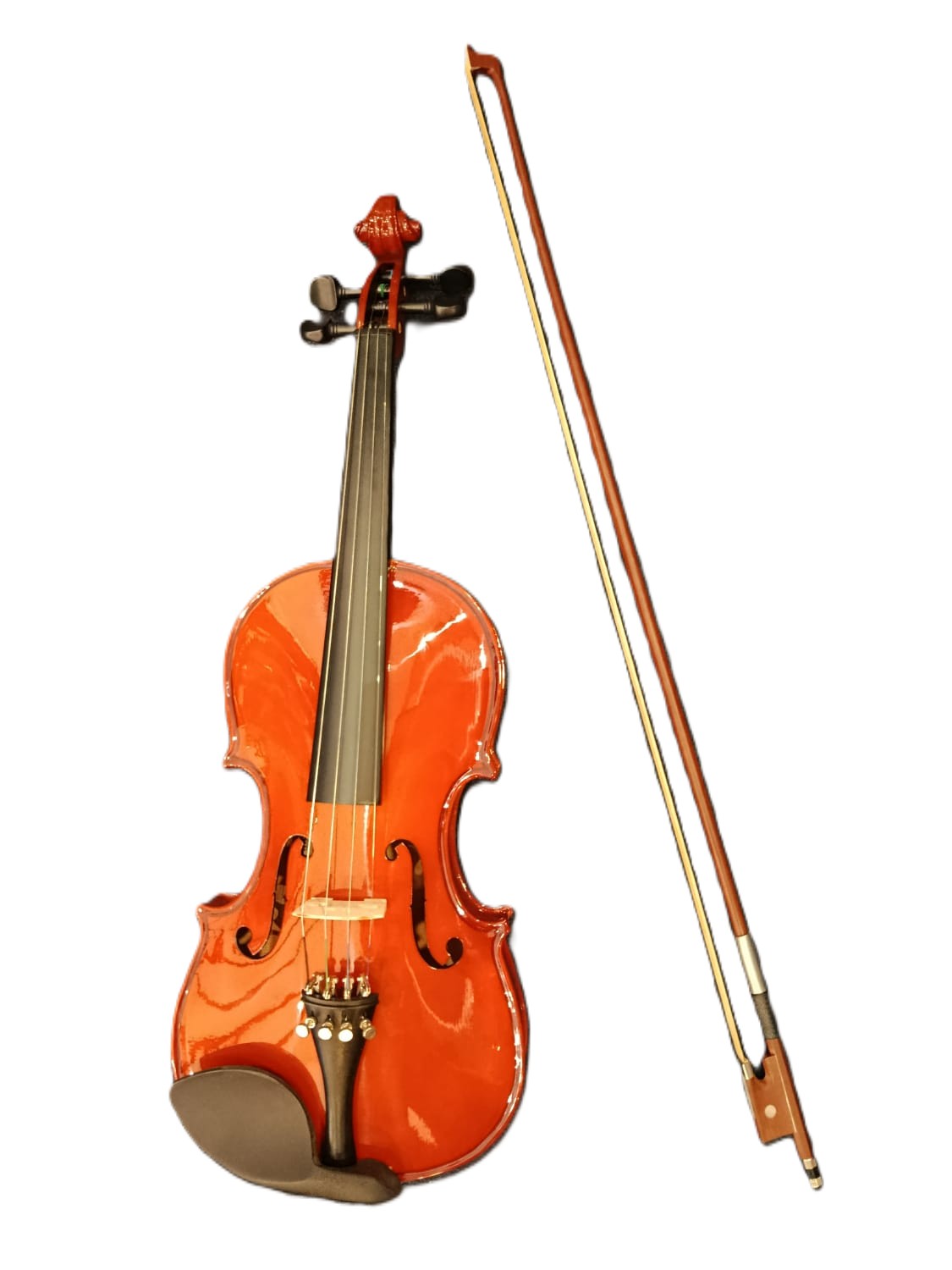
Let's quickly review the dimensions of control of a bowed violin string:
- Bow-String friction, controlled by rosin
- Bow pressure
- String Tension
- String Material
- String Length (changes with fret position)
- Bowing Speed
All of these variables are controllable by the musician, but some we can consider fixed during a performance. A Hurdy Gurdy player can easily change their cranking speed, and this becomes a very deep dimension to their sound. Imagine a palm-controlled 'accelerator pedal' on the Chord Organ to allow for dynamic wheel speeds through the motor.
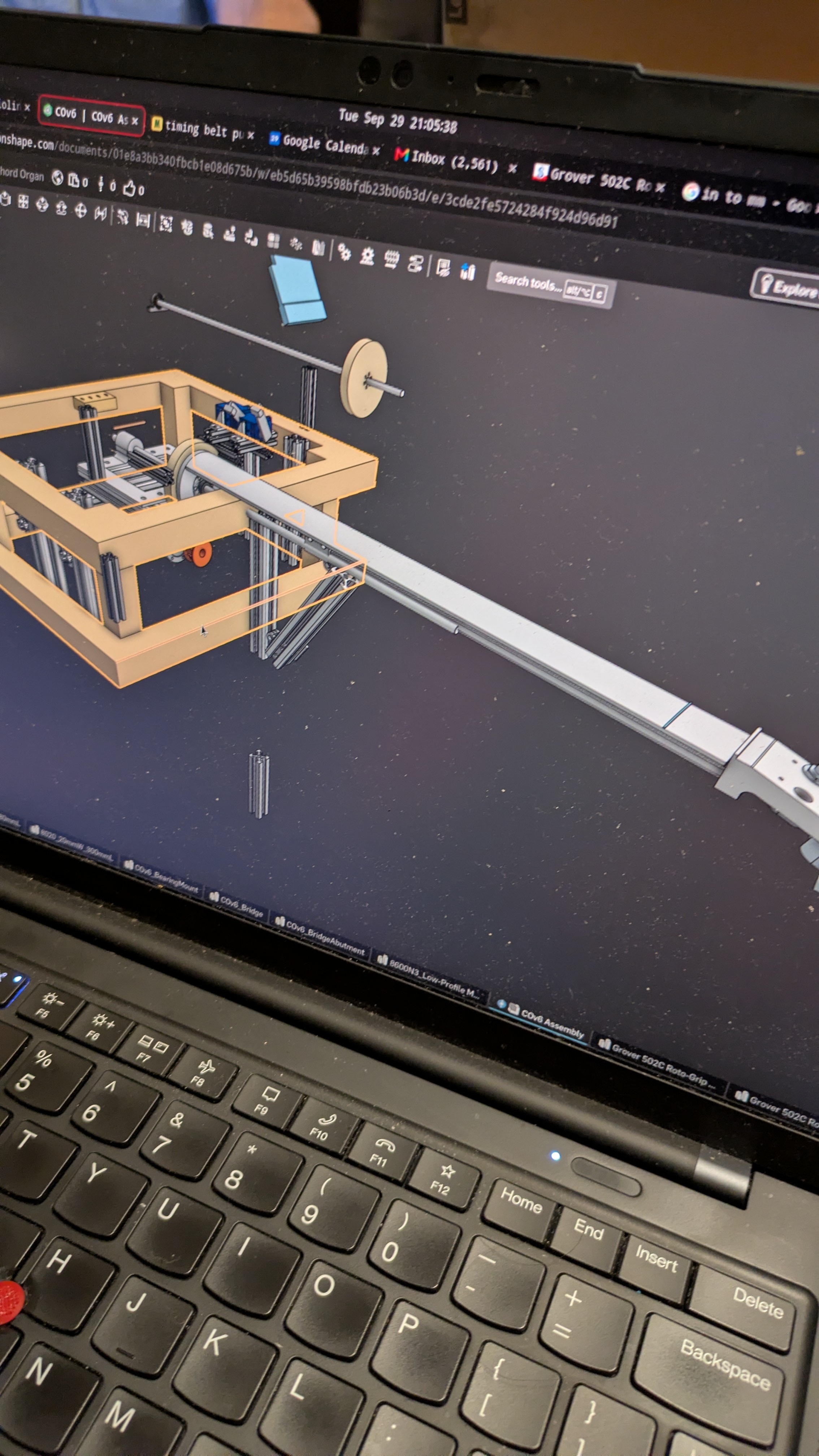
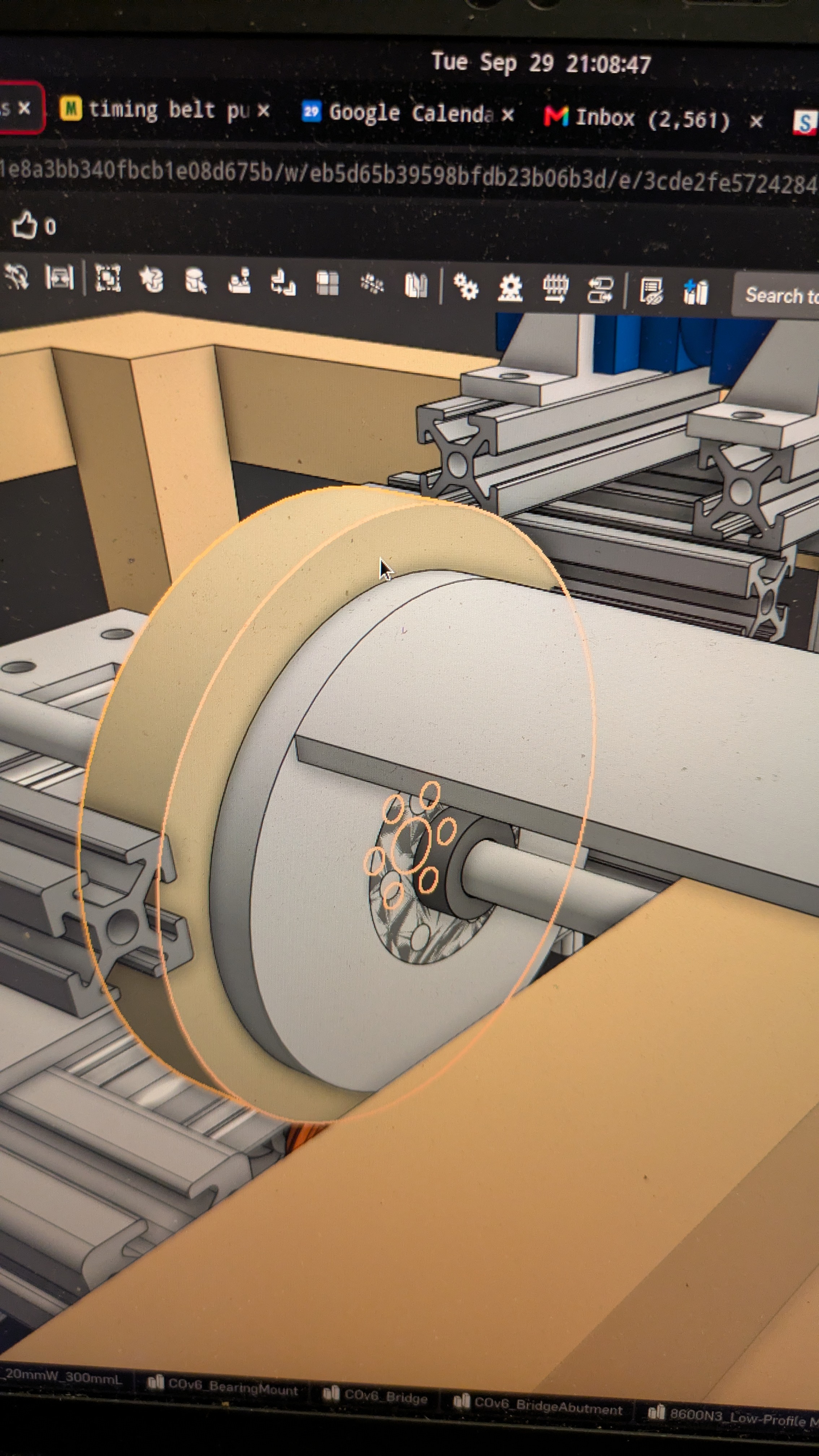
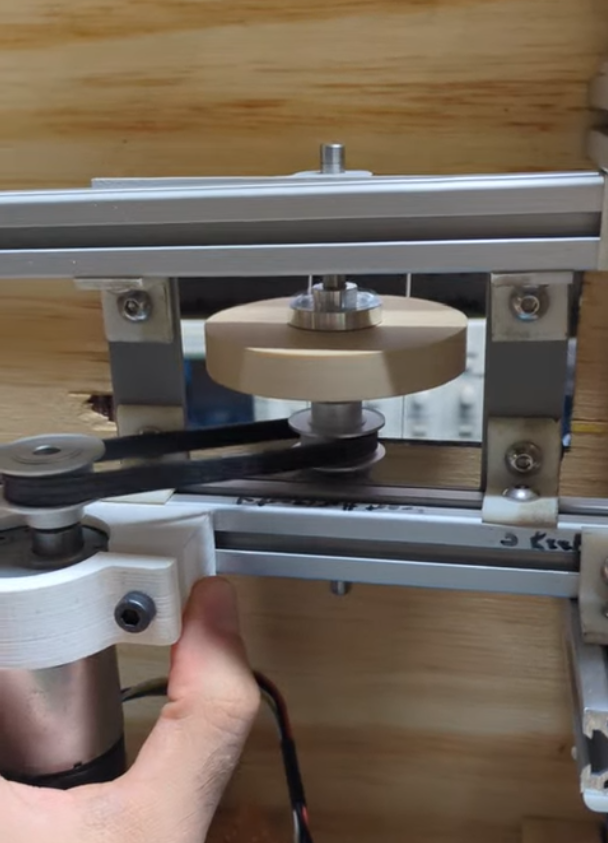
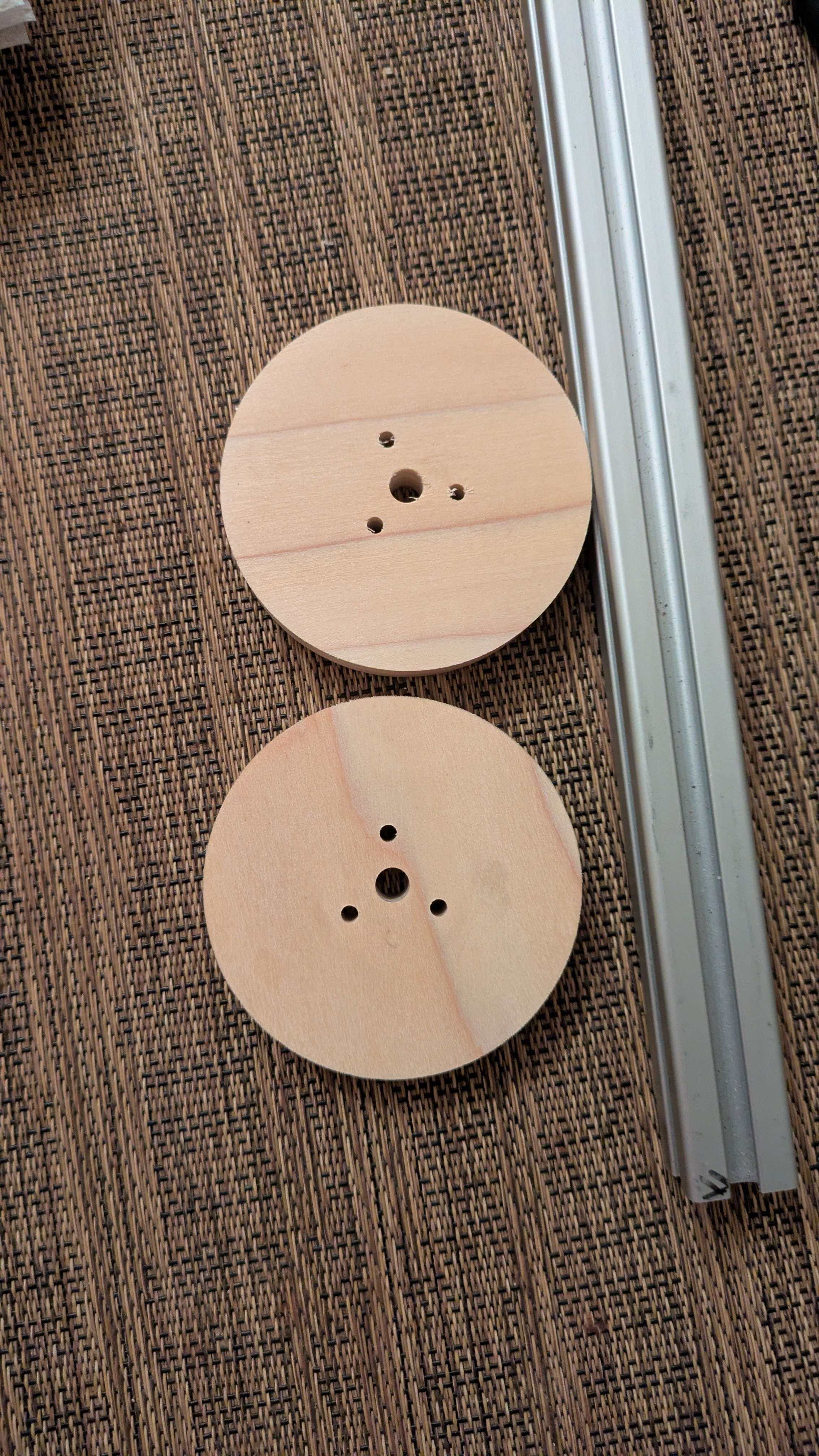
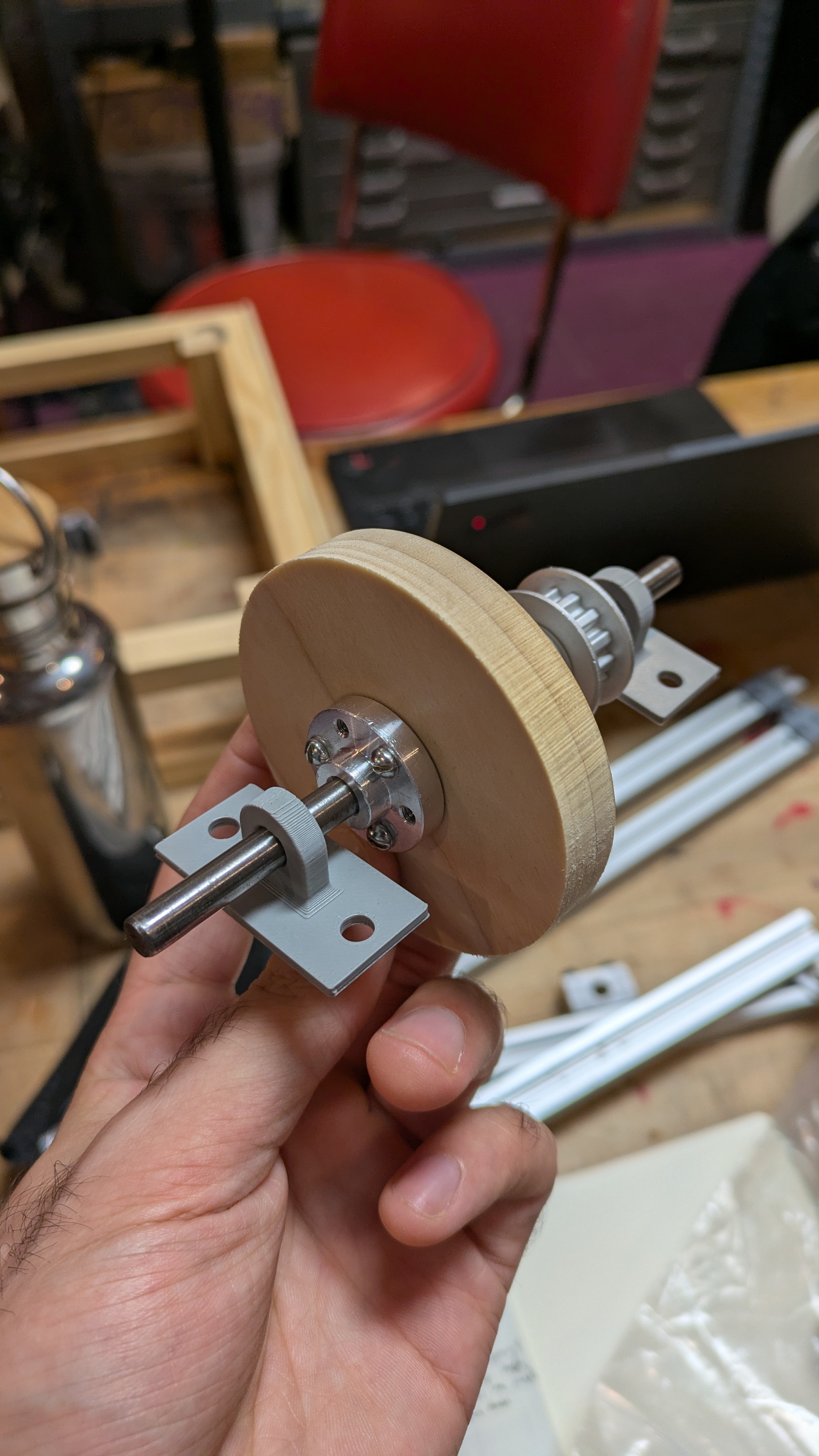
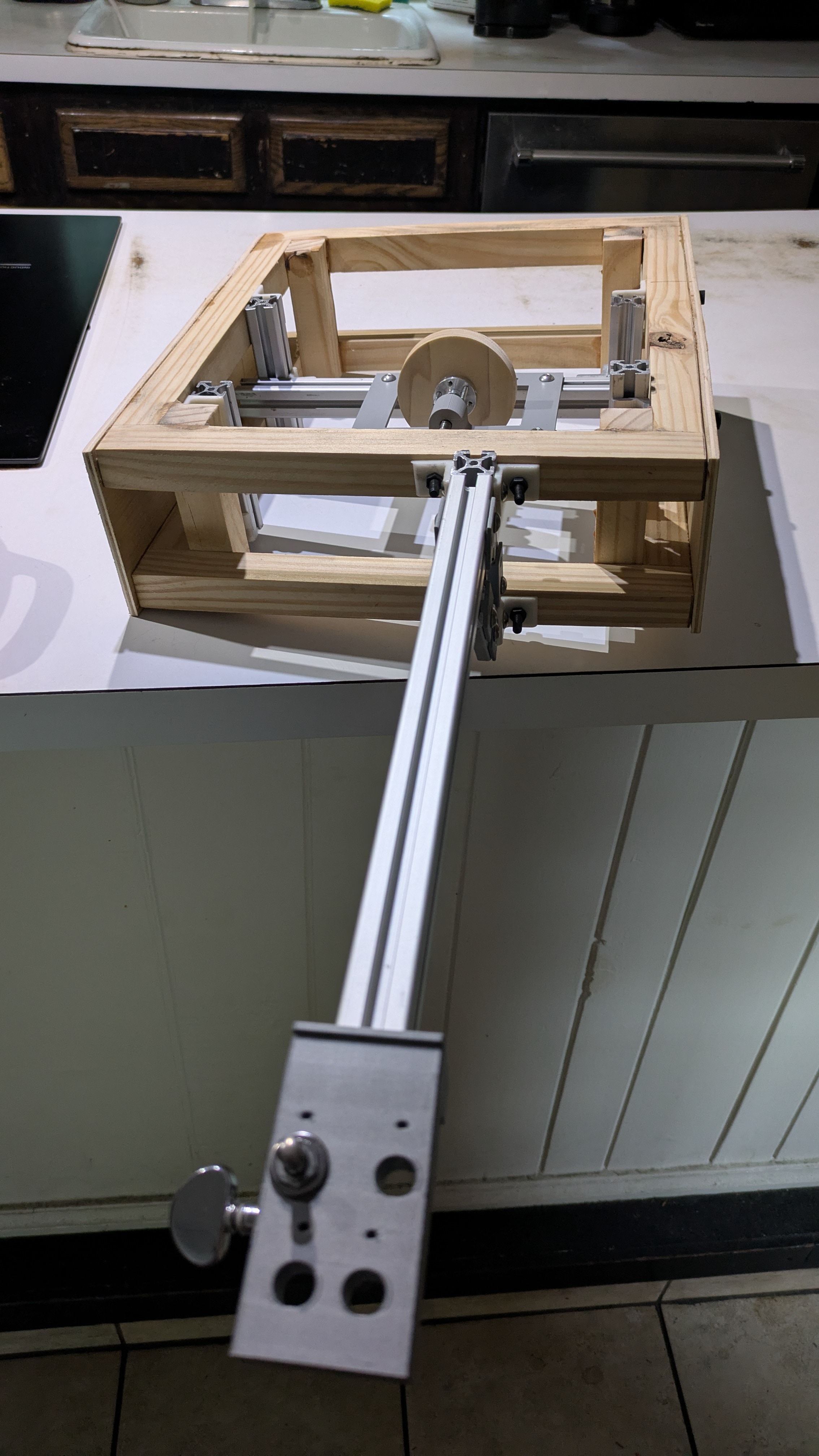
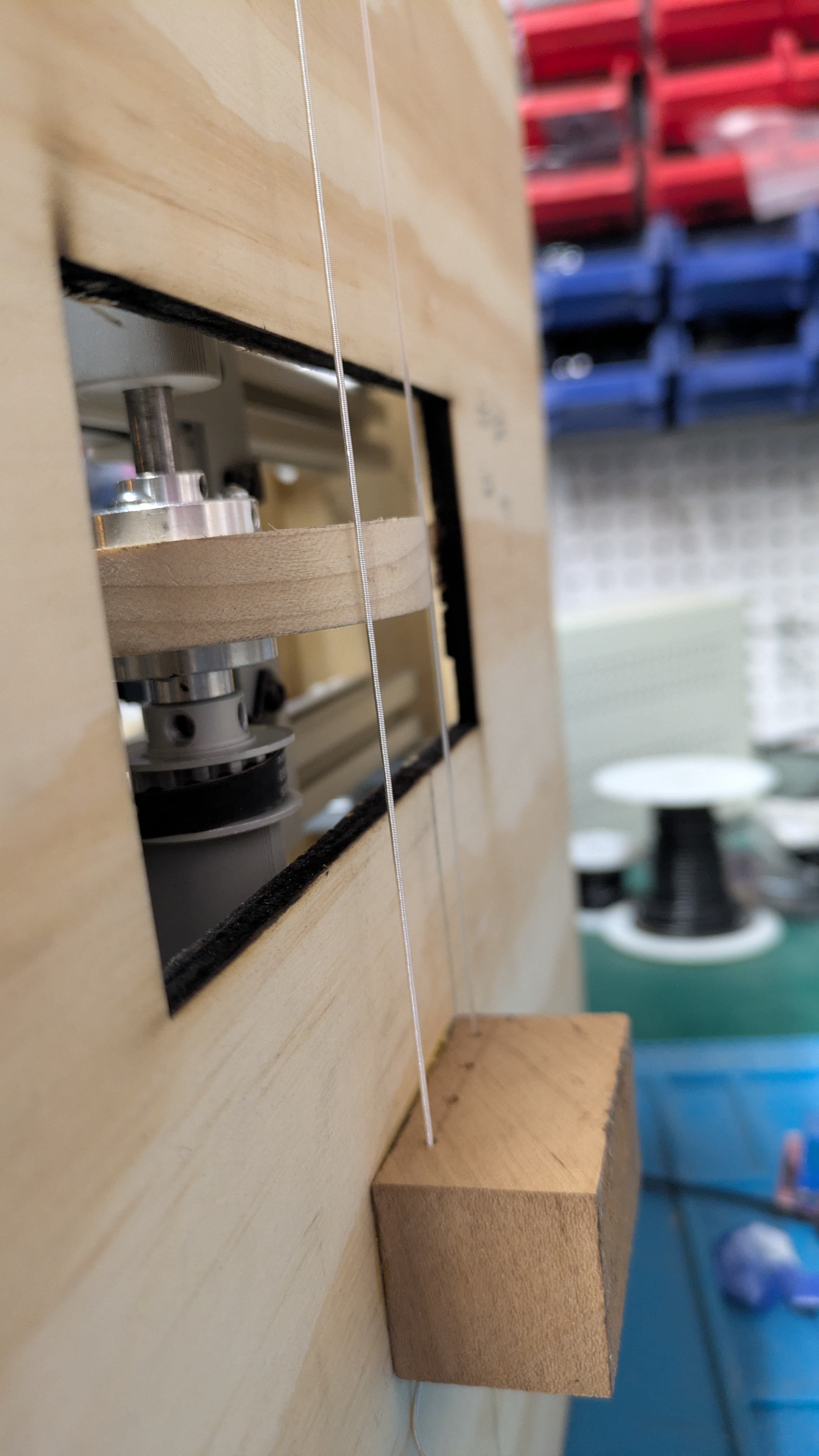
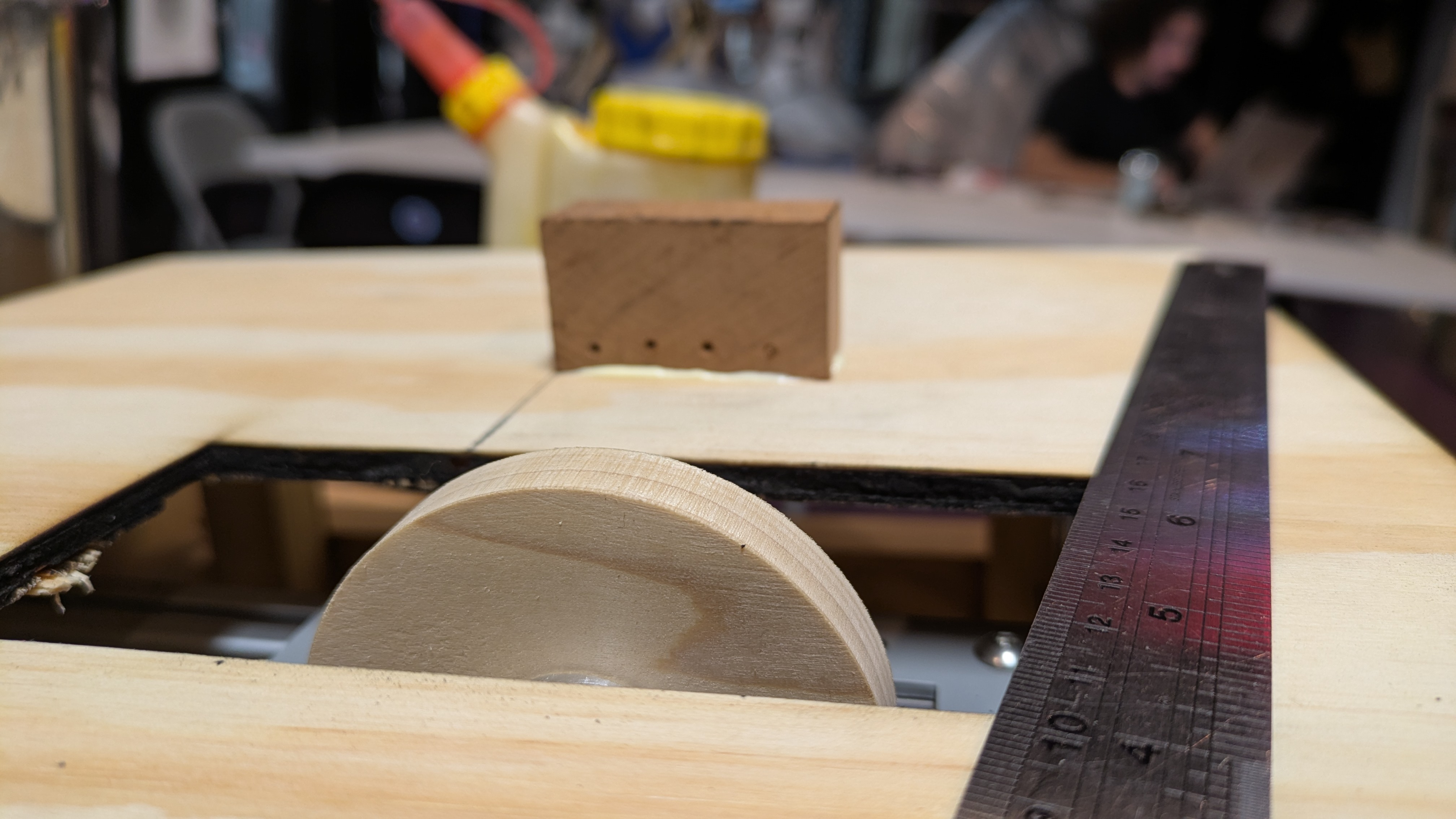
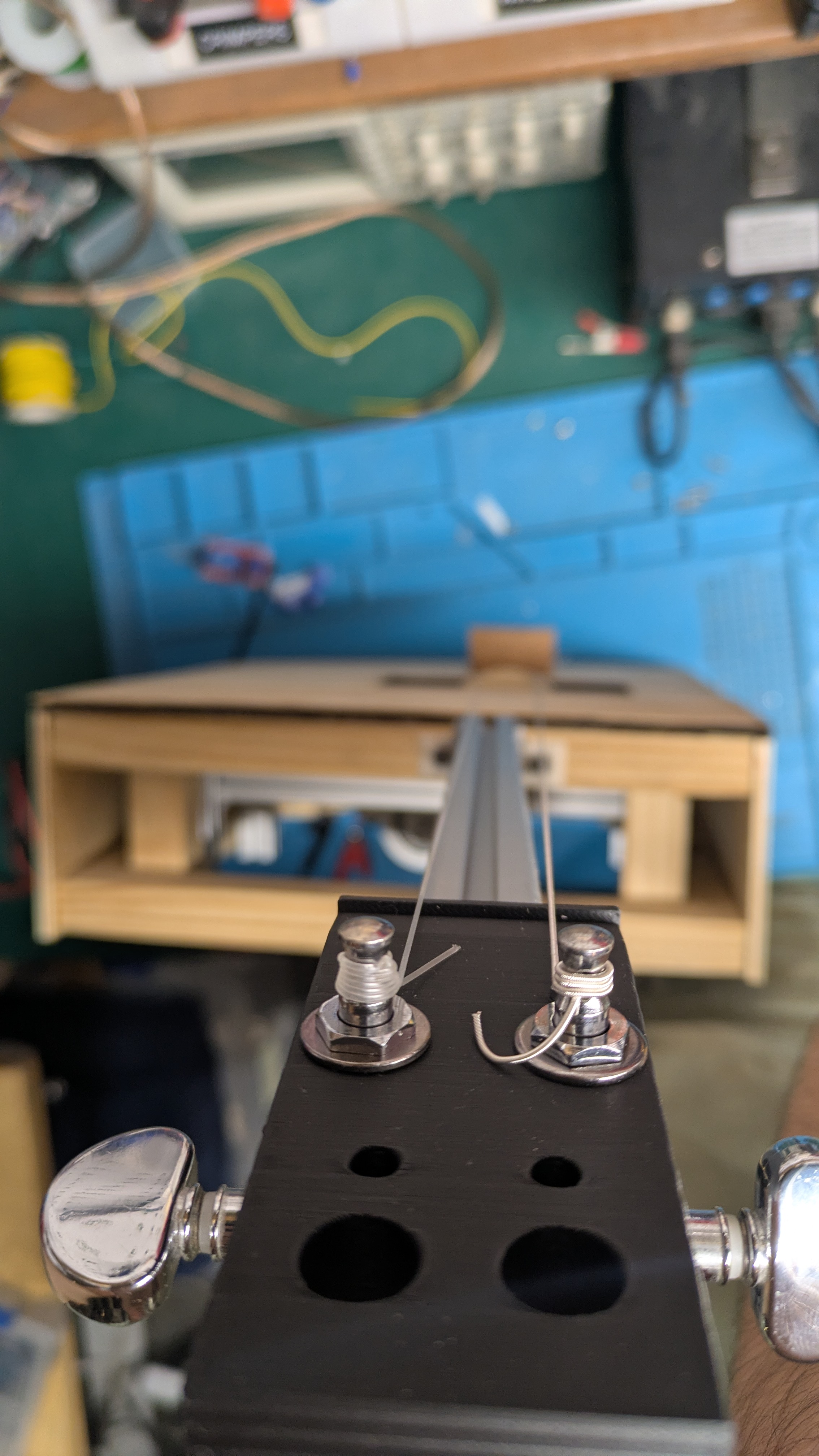
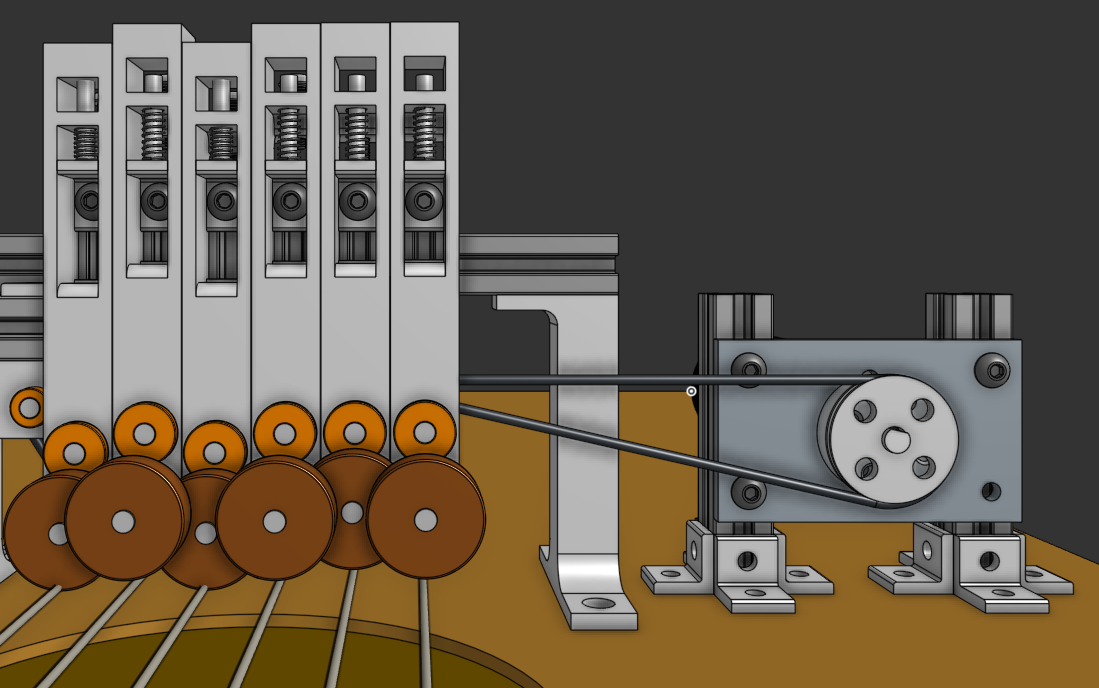
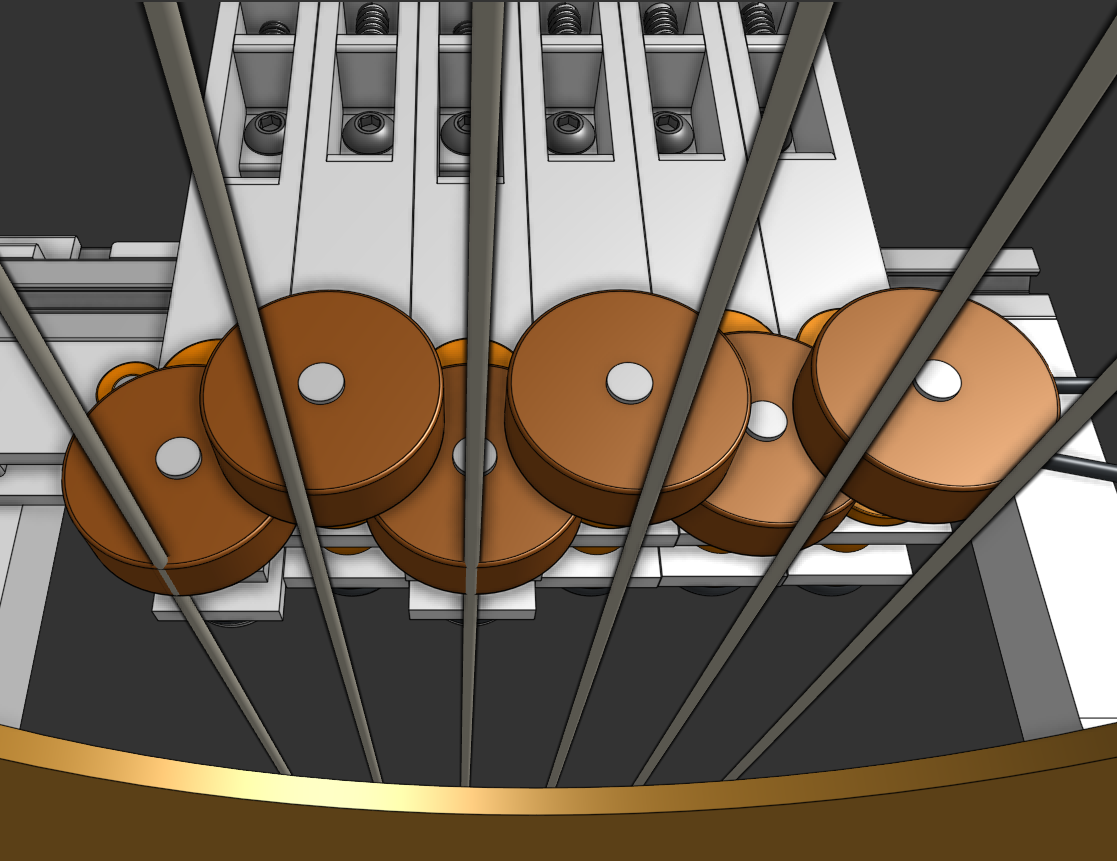
I made the first two large wheels for this project on a lathe. It is vital that the wheel-axle system is as rotationally symmetric as possible, since any eccentricity would mean a change in wheel-string pressure along the rotation, which might have an audible effect.
March 9th, 2026
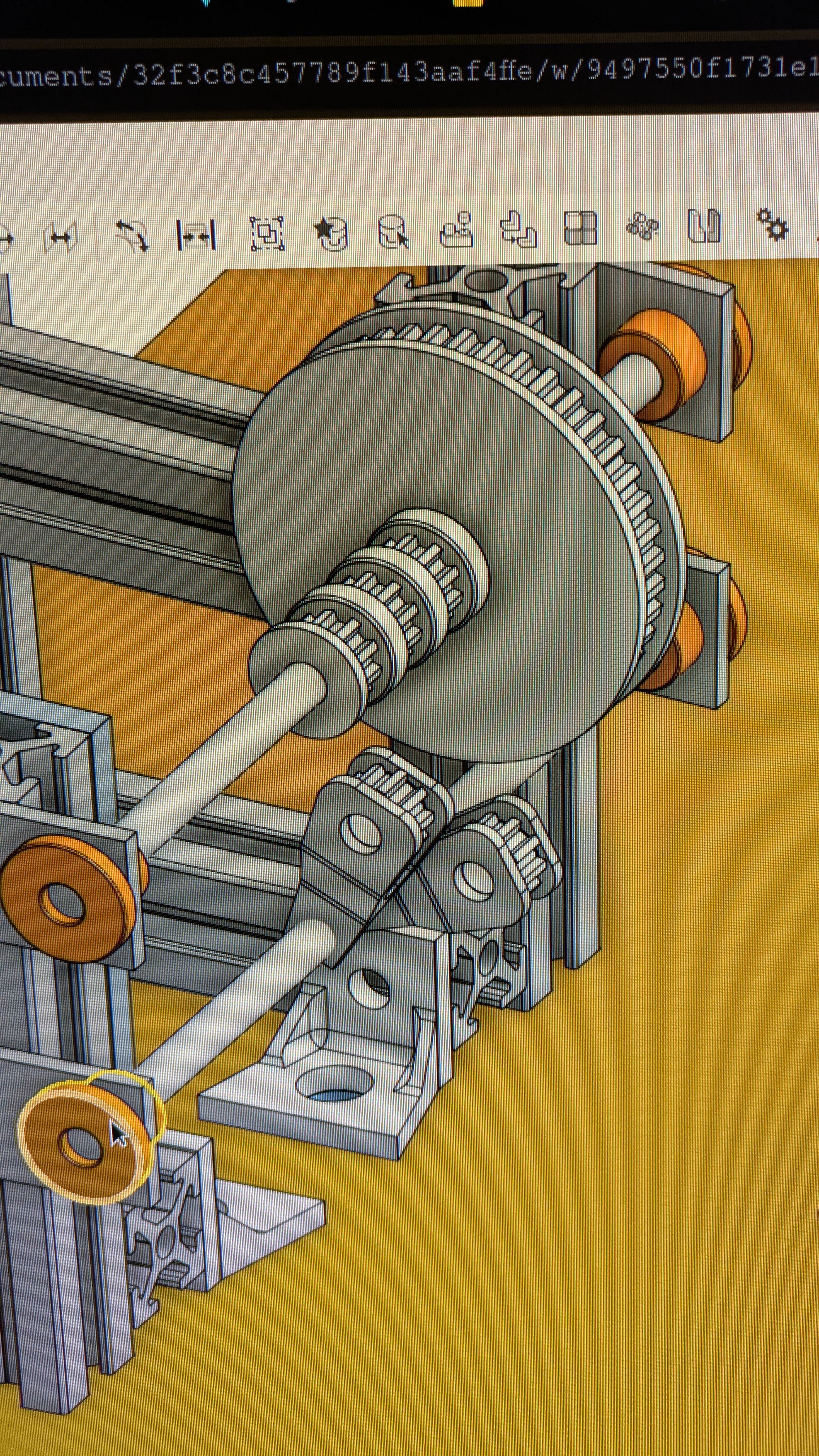
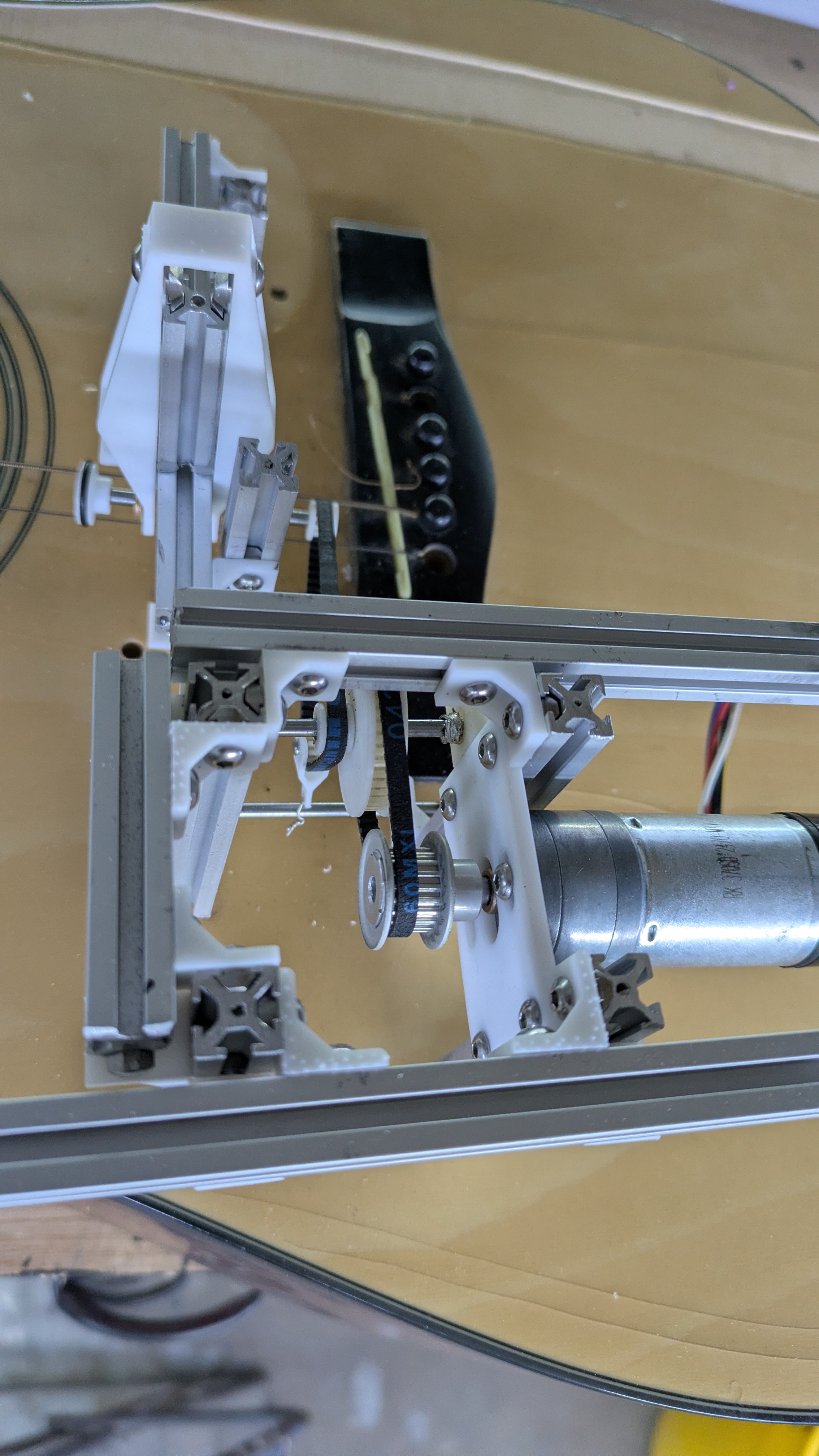
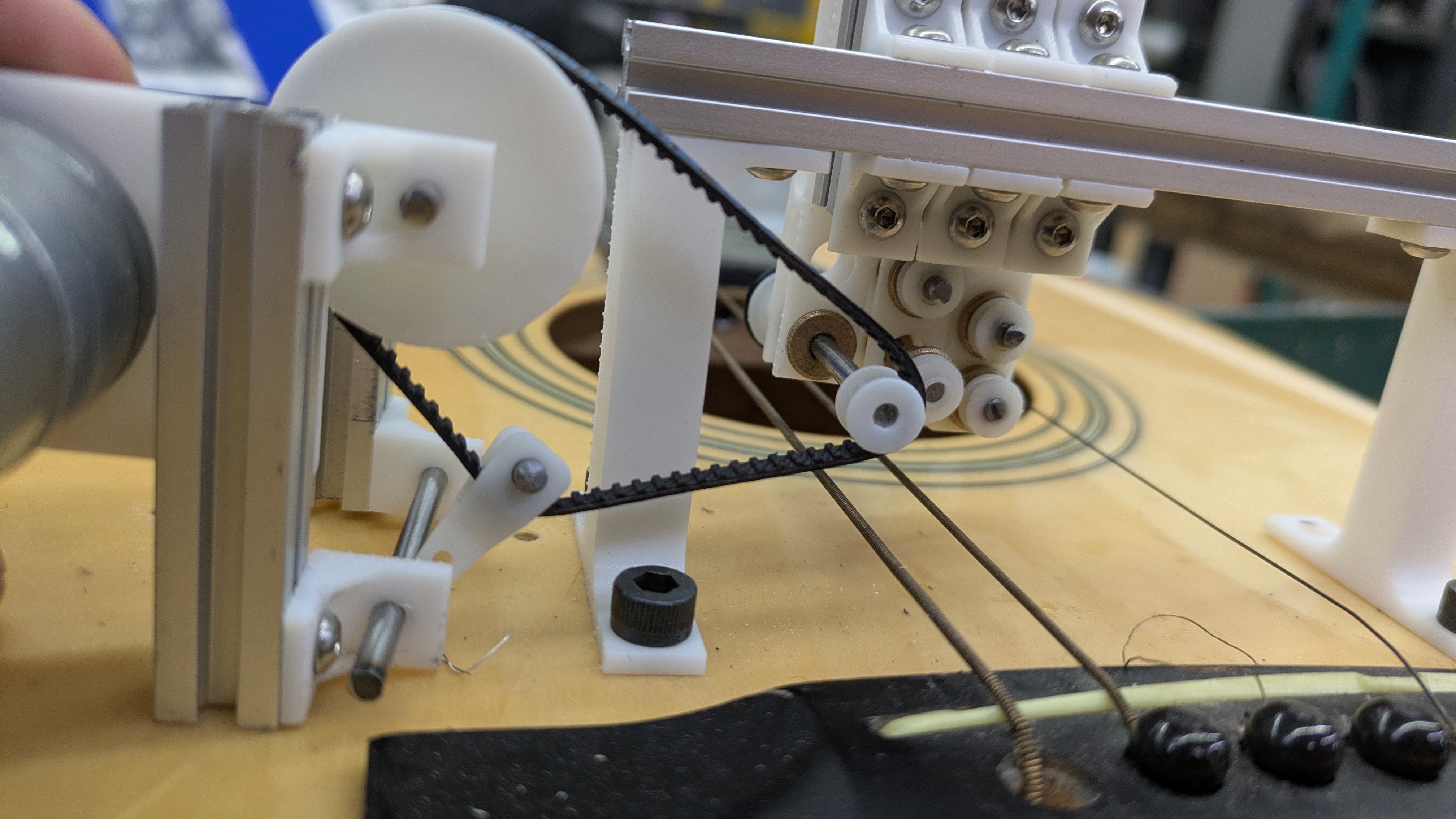
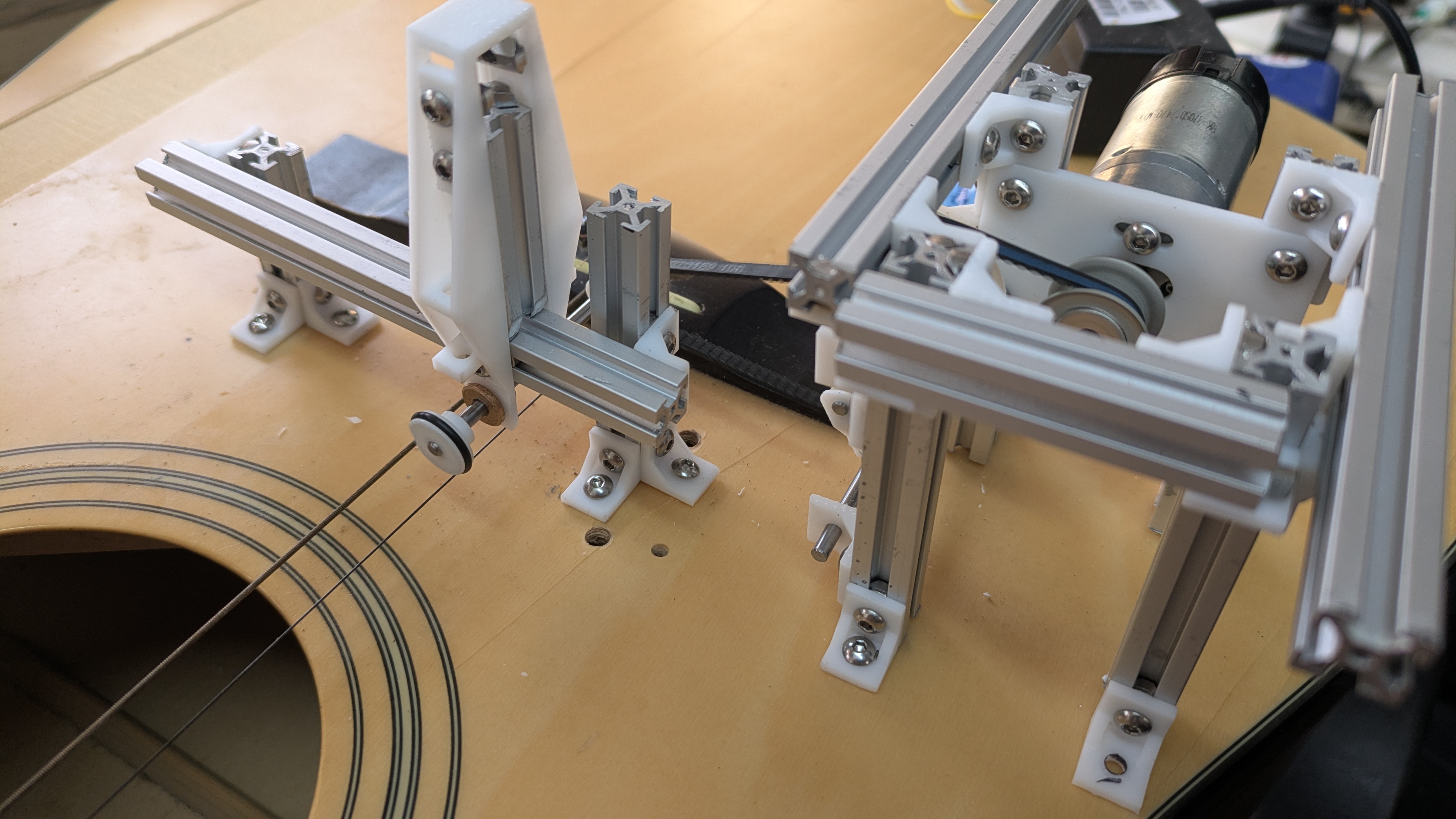
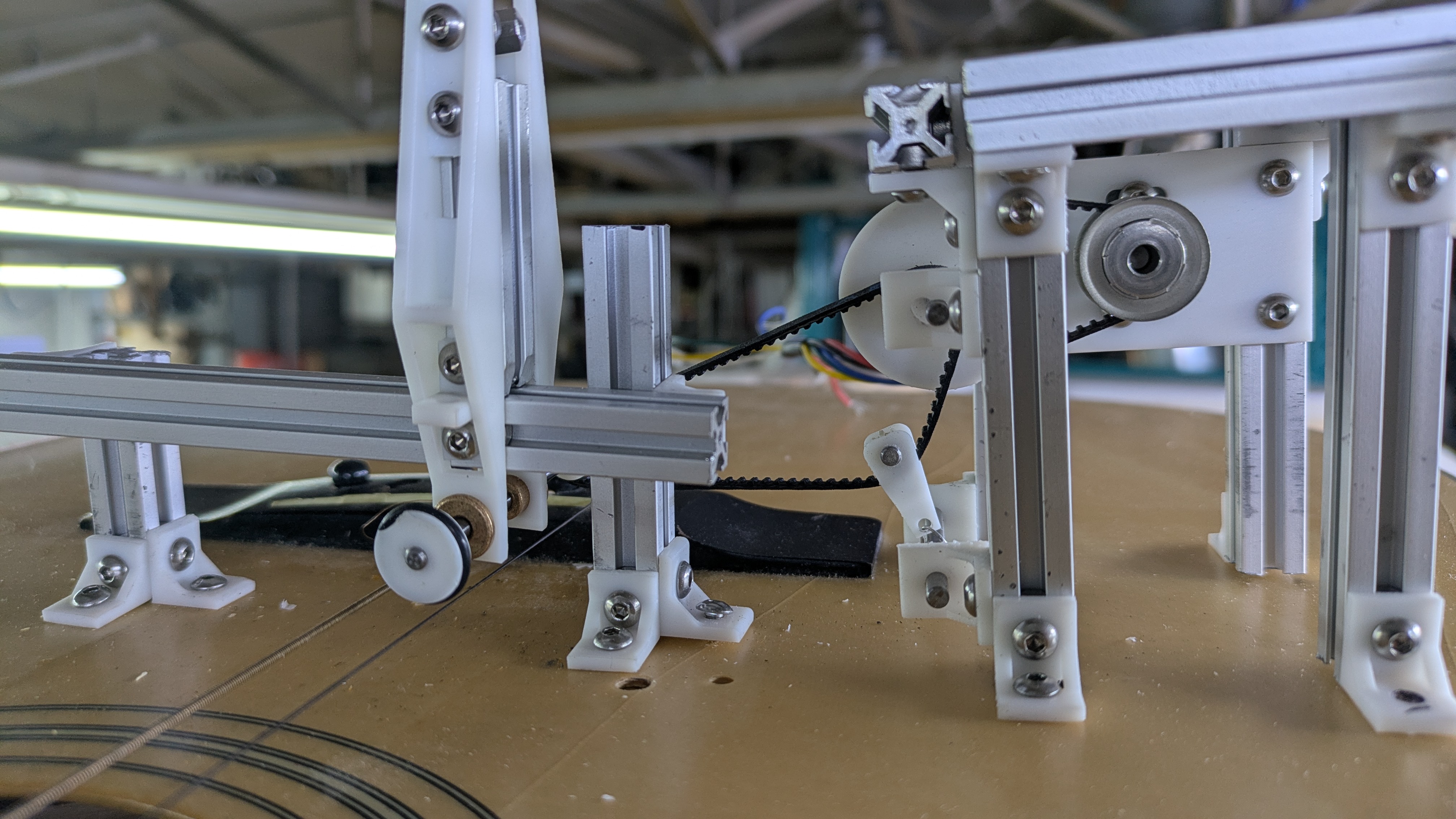
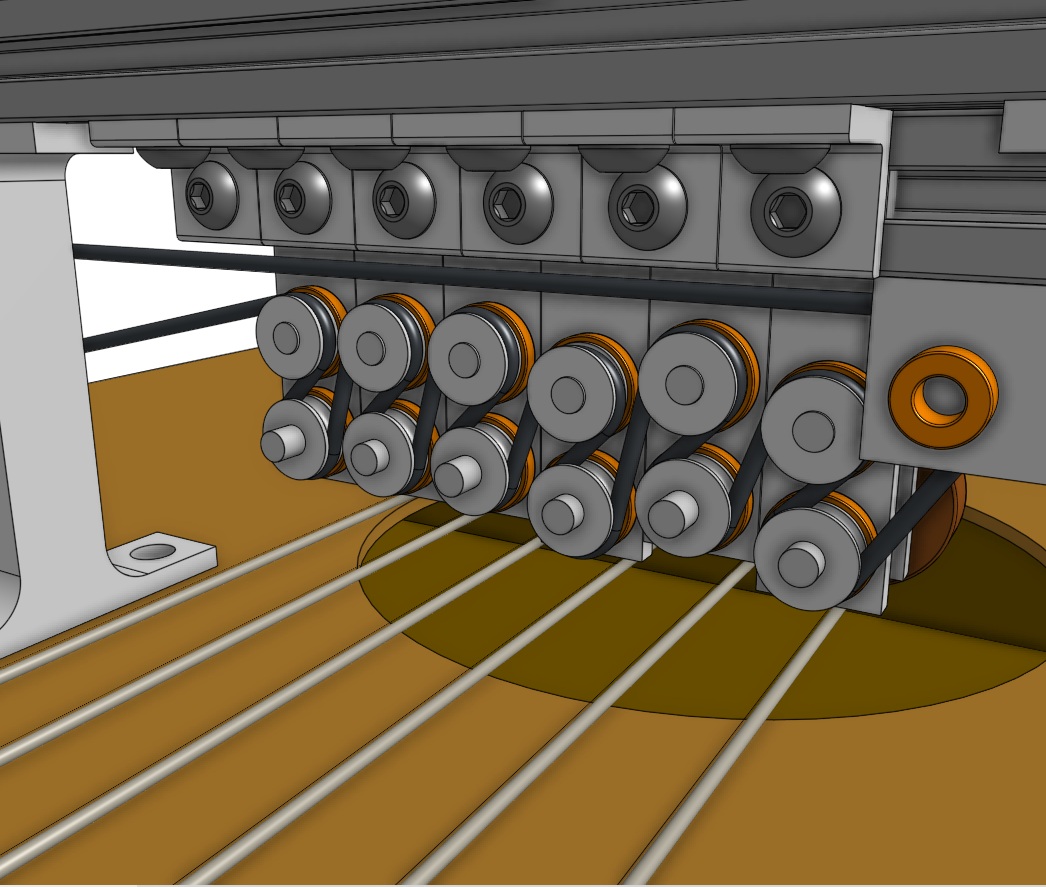
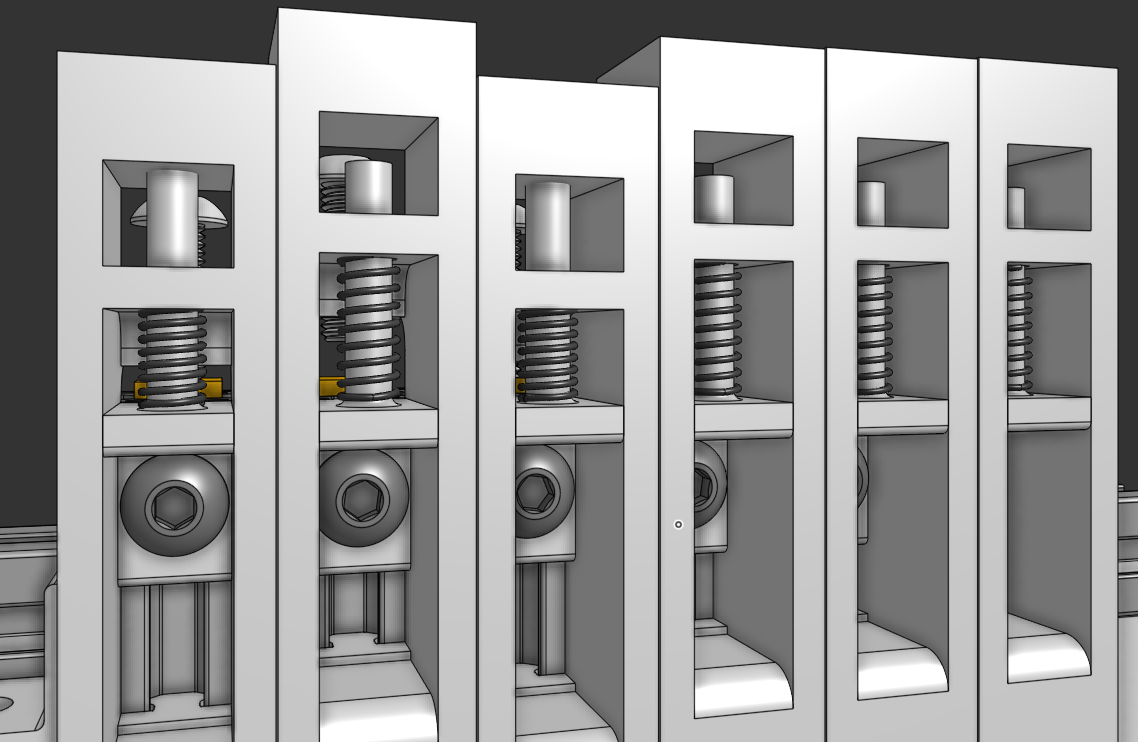
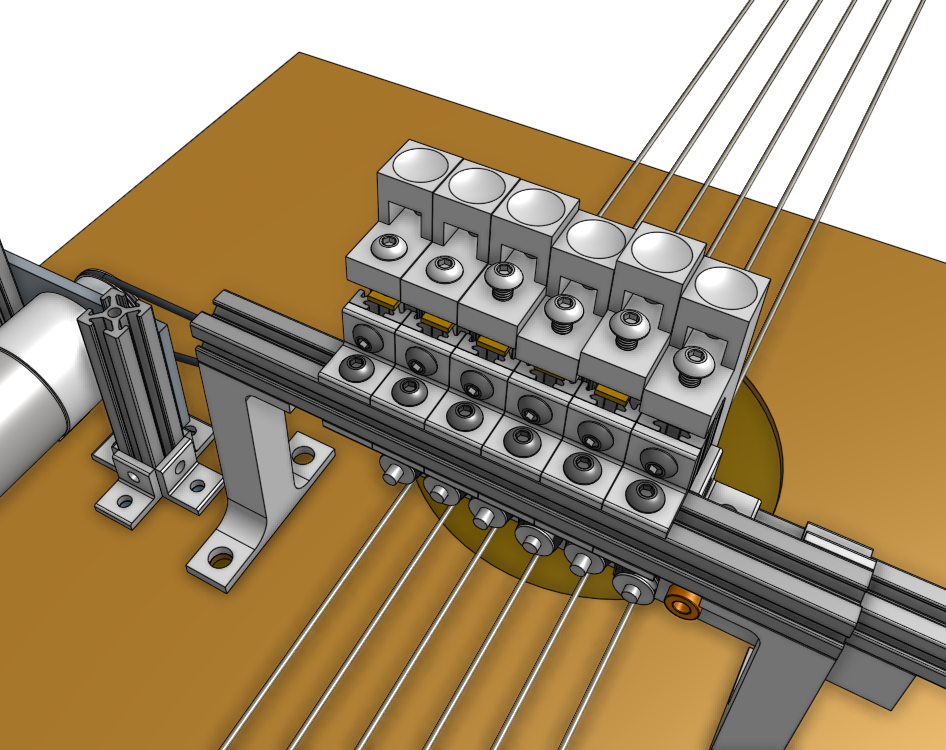
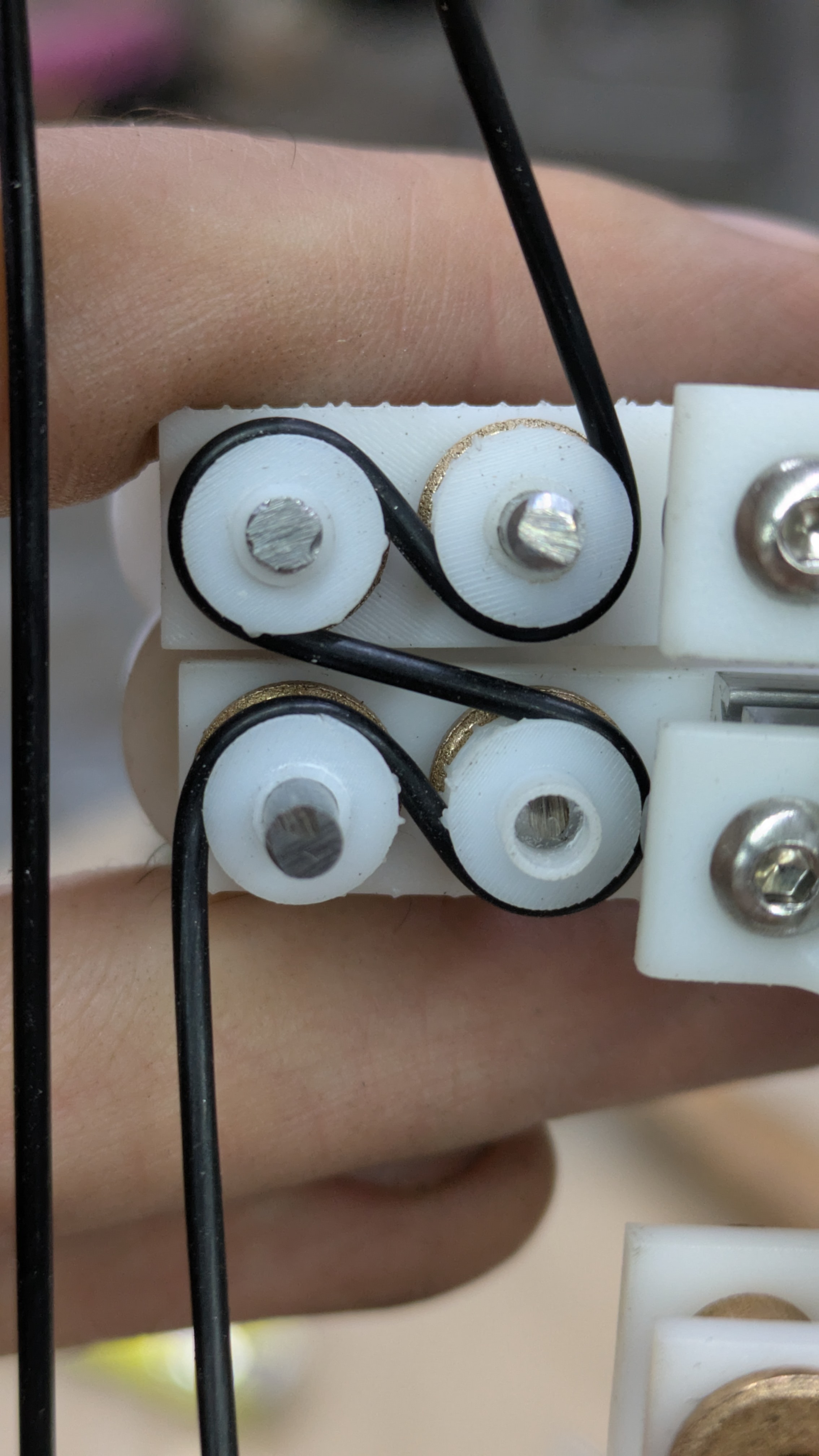
I spent a lot of time CAD'ing out a brand new mechanism where the power transimssion was parallelized instead of in a single belt pulley, which got stuck immediately. This system also uses a toothed belt, which will eliminate slip. I love he tensioner I made to keep the belt taught. Everything was again resin printed for a tight tolerance.
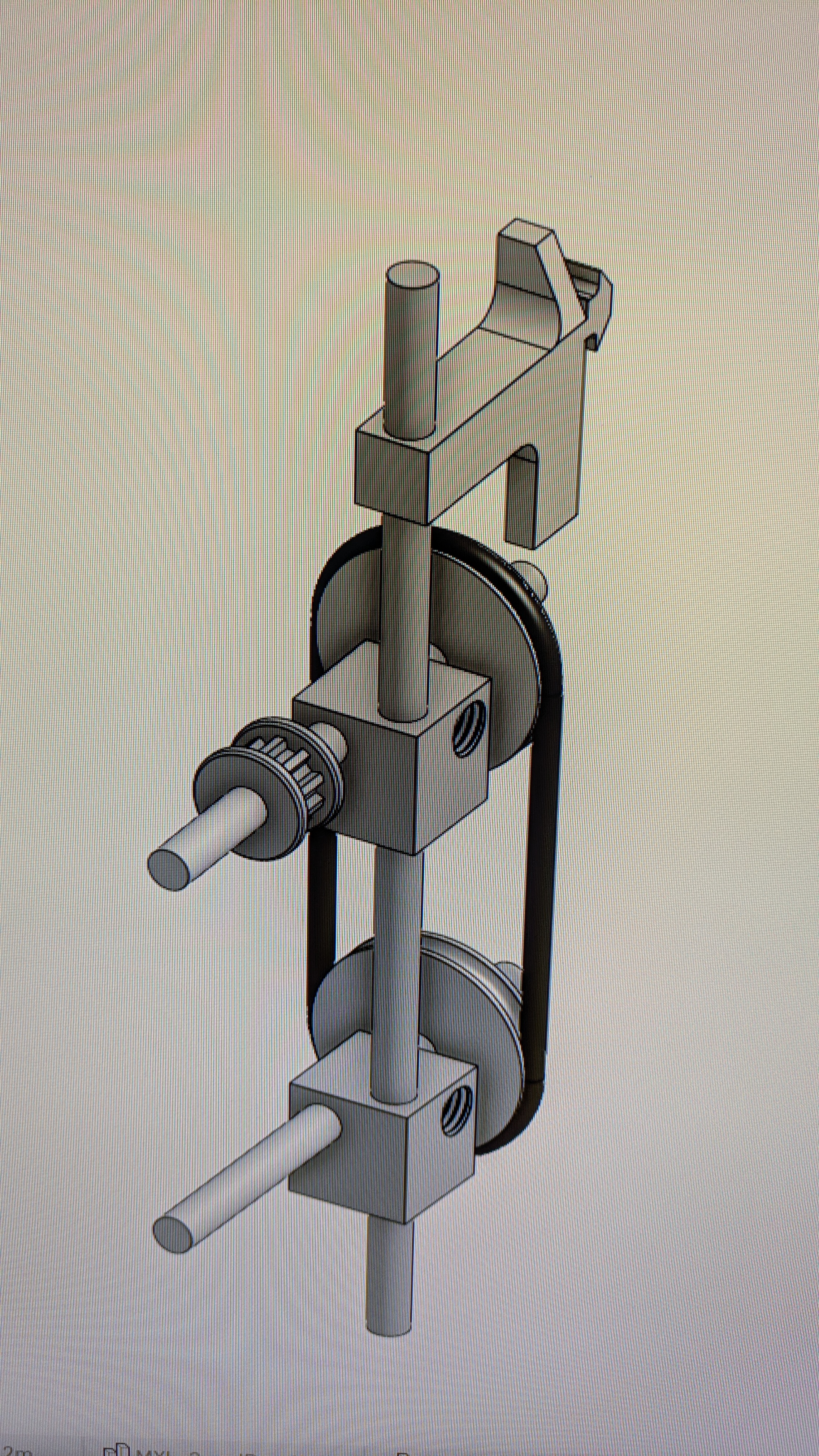
While designing this iteration I briefly onsidered a fixed wheel system, where small pulleys which had their own motors were stretched along a vertical axle. I scrapped the idea, but these little axle joiners are worth exploring. The axles are inserted with a close fit, and are secured with a set screw. The current shape of the joint is a square, but could be made smaller. I'm calling them 'T-joints' right now and am considering having a few CNC'd to see how practical they are as a micro modular construction system
October 14th, 2025
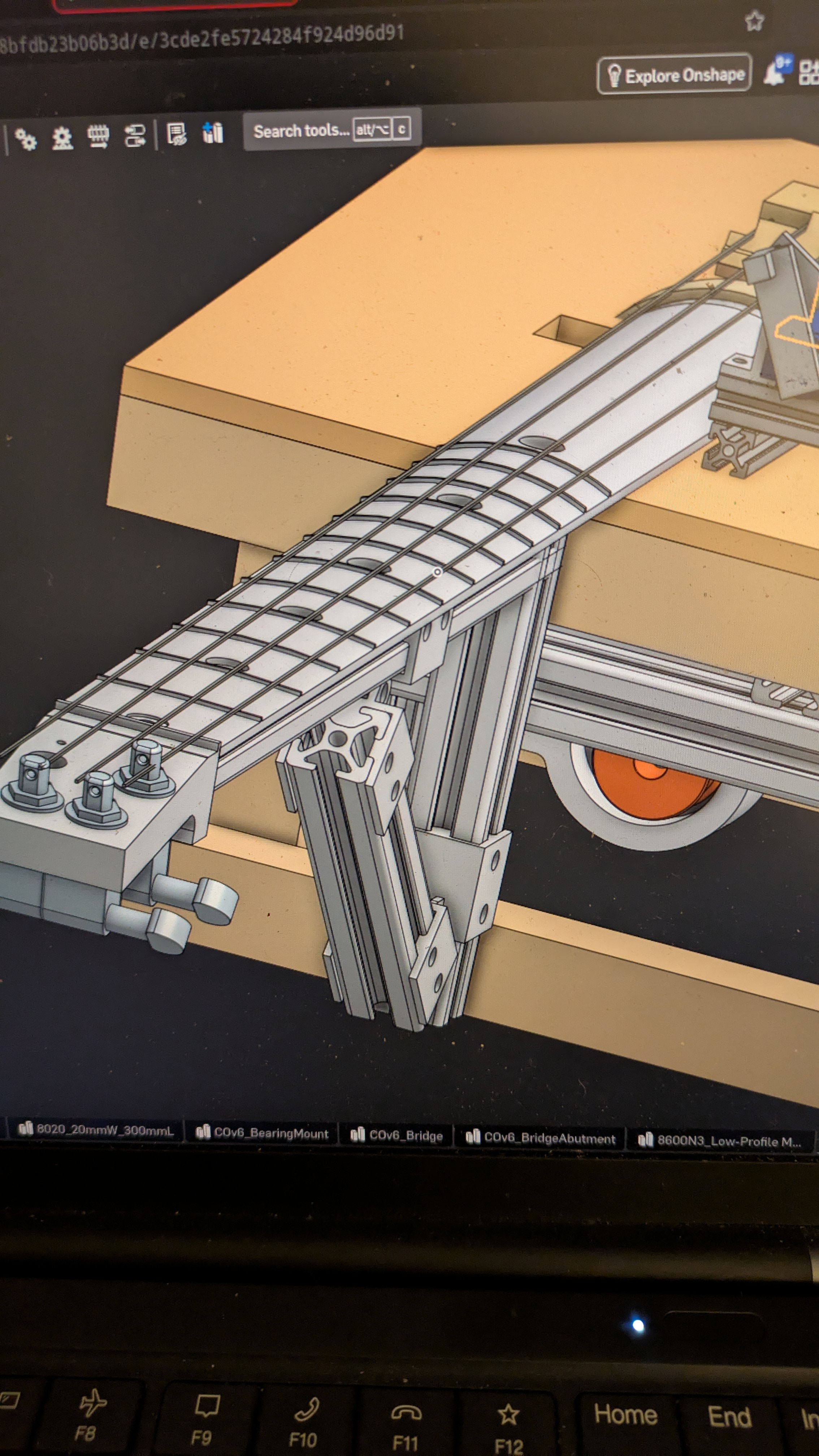
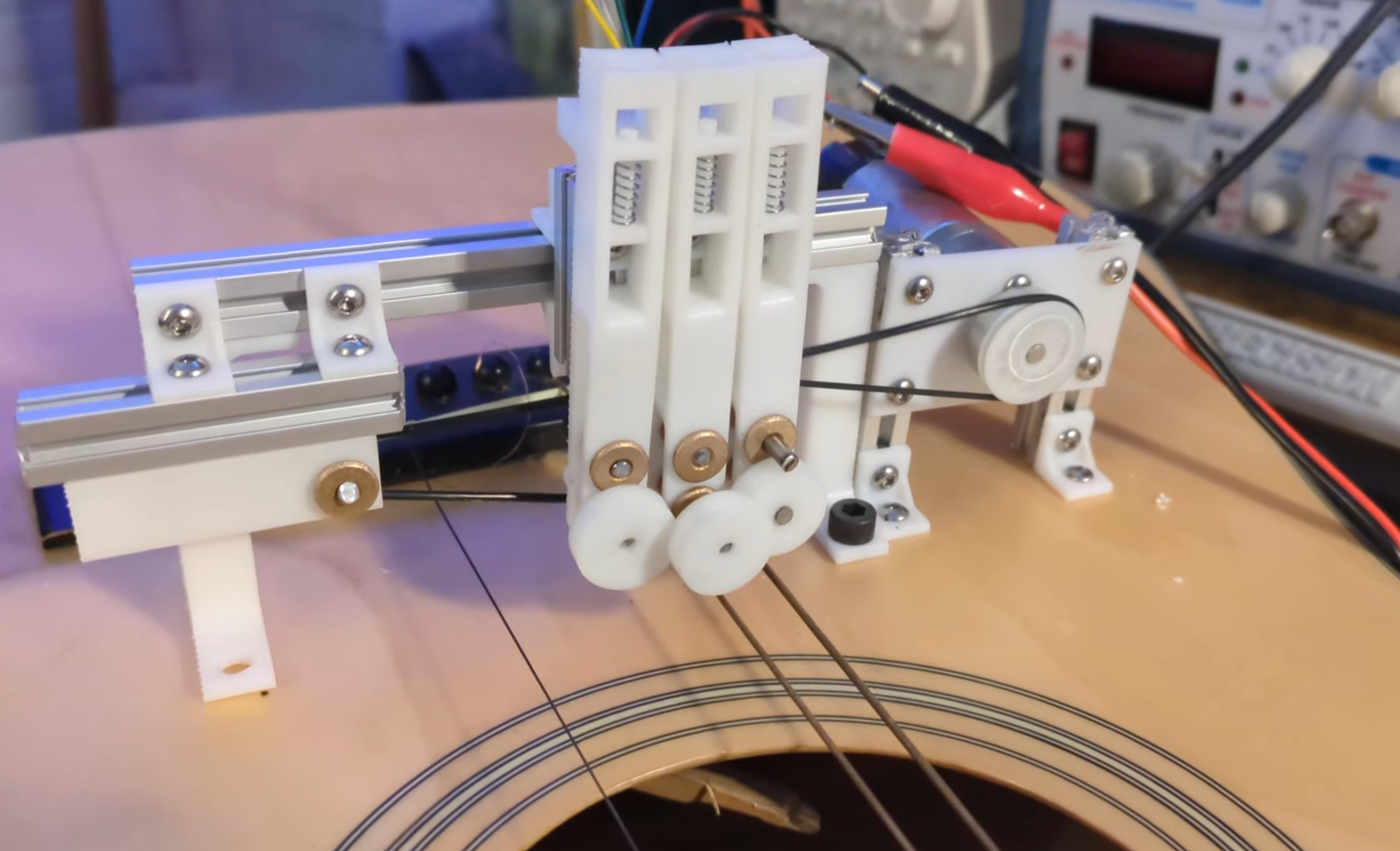
To build my first prototype I found myself a very cheap, busted up guitar that I had no issues dotting with boreholes and slathering with epoxy. I need a decently sturdy, decently resonant box as a testbench for all the components, and an old guitar would save me a lot of time and cost spent building something new.
October 5th, 2025
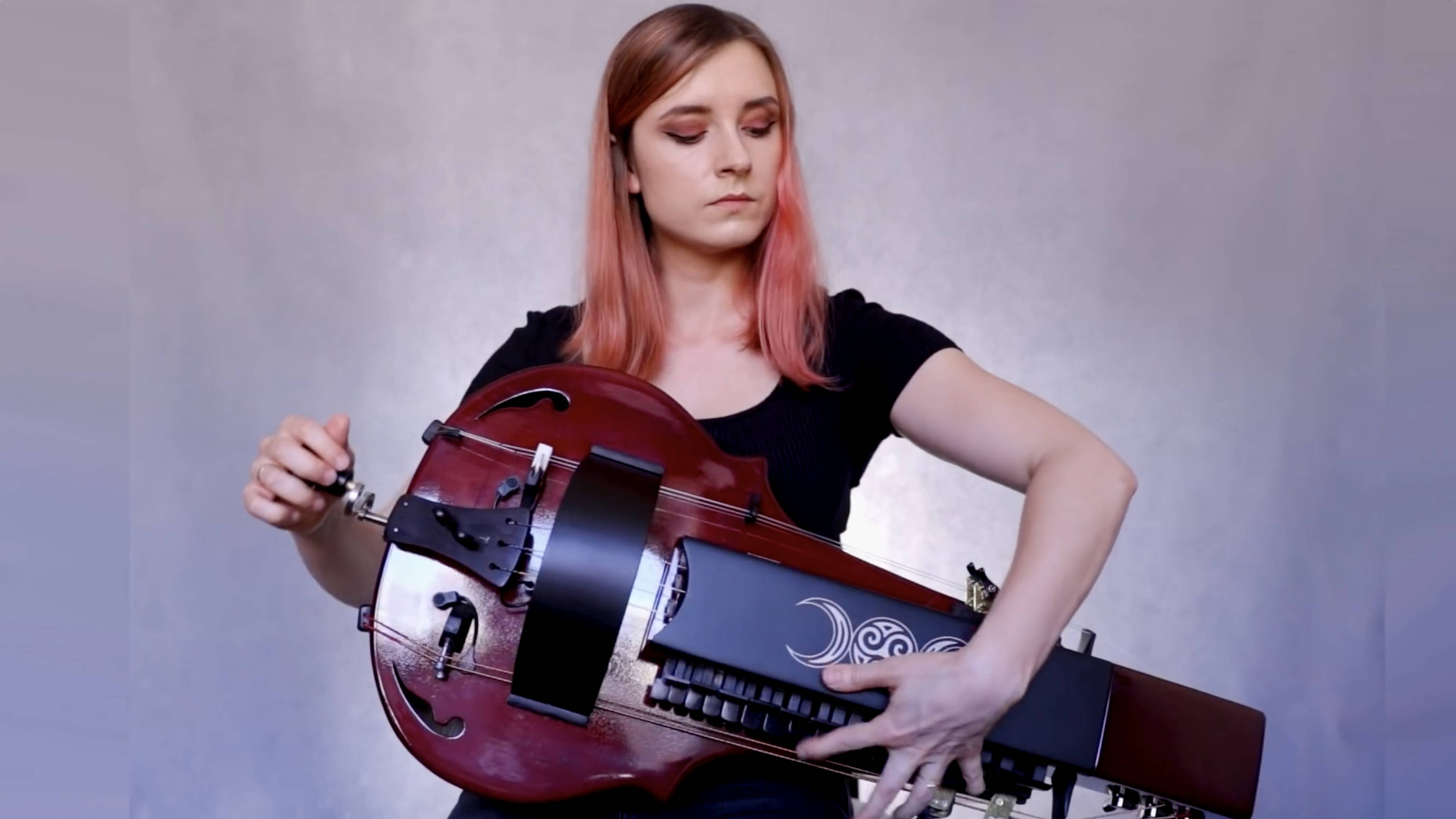
Hello! This is my first entry for a new musical instrument (see chaos weapon) that I'm calling the "Chord Organ". It is heavily inspired by the Hurdy Gurdy, an instrument from Medival Europe that uses a cranked wheel to actuate strings, like a violinist using a bow. The Hurdy Gurdy's sound is haunting, the melodies played on it are animating, and the engineering design of this old instrument is ripe for experimentation with modern tools and methods.
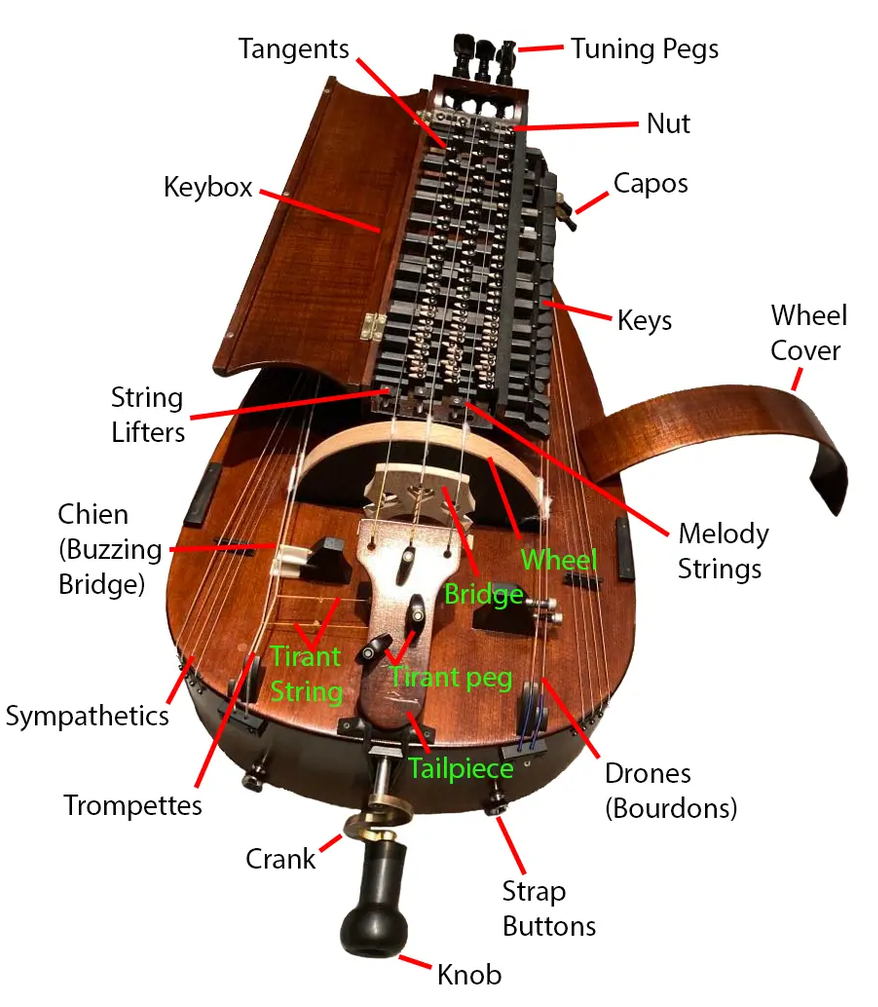
I think it's necessary to understand the Hurdy Gurdy in more detail first, because my work really starts where the Gurdy ends. The Hurdy Gurdy has a few types of strings, all of which are bowed by the cranked wheel. Pitch is selected from the melody strings with a chromatic keyboard of levers, instead of a fretboard or fingerboard. Drone strings are unfretted and continually ring out the same note as the wheel is cranked, like the drones on a bagpipe. I love the sound of the melody and drone strings together. It's extremely rich but still pleasant, much moreso than the bagpipes, and I would argue is capable of more human expression through the wheel than what pipers can achieve with breath and pressure.

I am primarily interested in making a Hurdy Gurdy that can play different chords. I want to do away with the drone strings and build a more complicated system that can support four to six melody strings playing simultaneously. I am imagining a sound similar to a string quartet holding out a chord together. A lofty goal I know, it's hard to imagine a sound so dependent on human articulation, strength, haptic and auditory feedback, and skill.